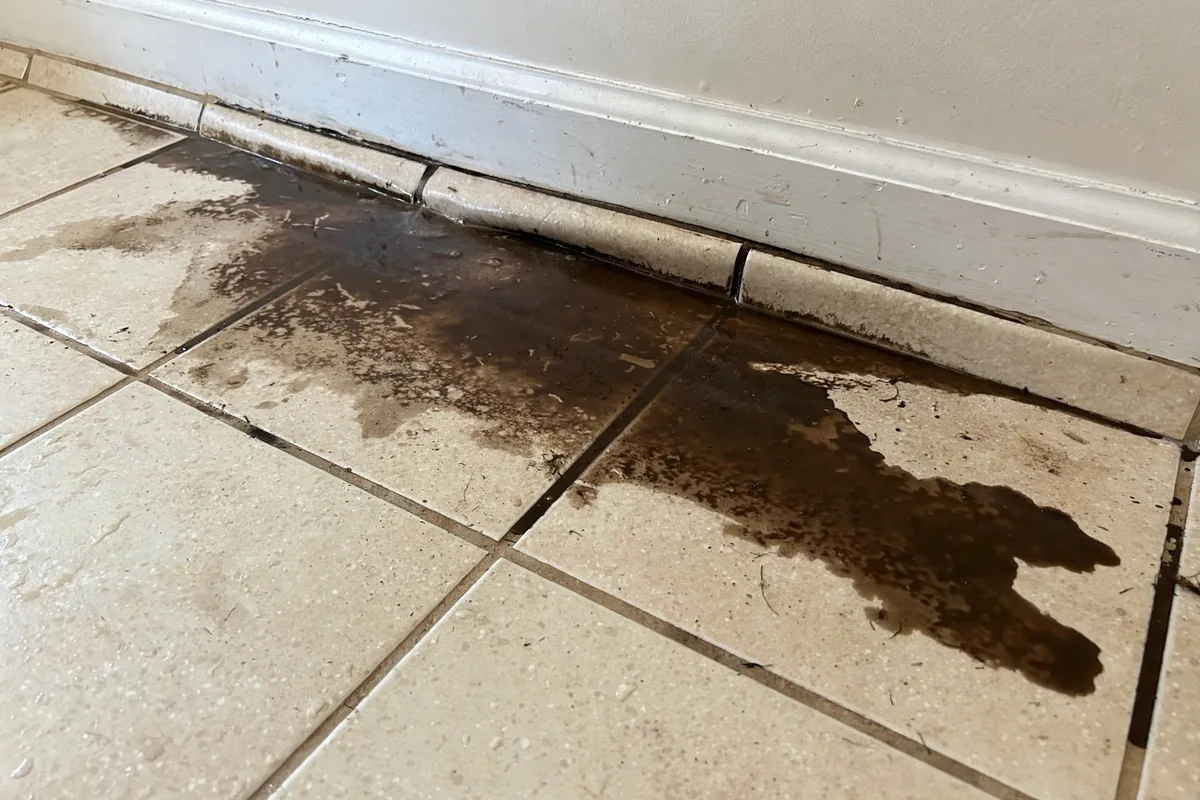
7 Signs You Have a Slab Leak
Warm spots, damp floors, and a jumping water bill can all point to a leak under your slab. Learn the seven signs to watch for and what to do first.
Slab Leak Repair in Phoenix, Arizona
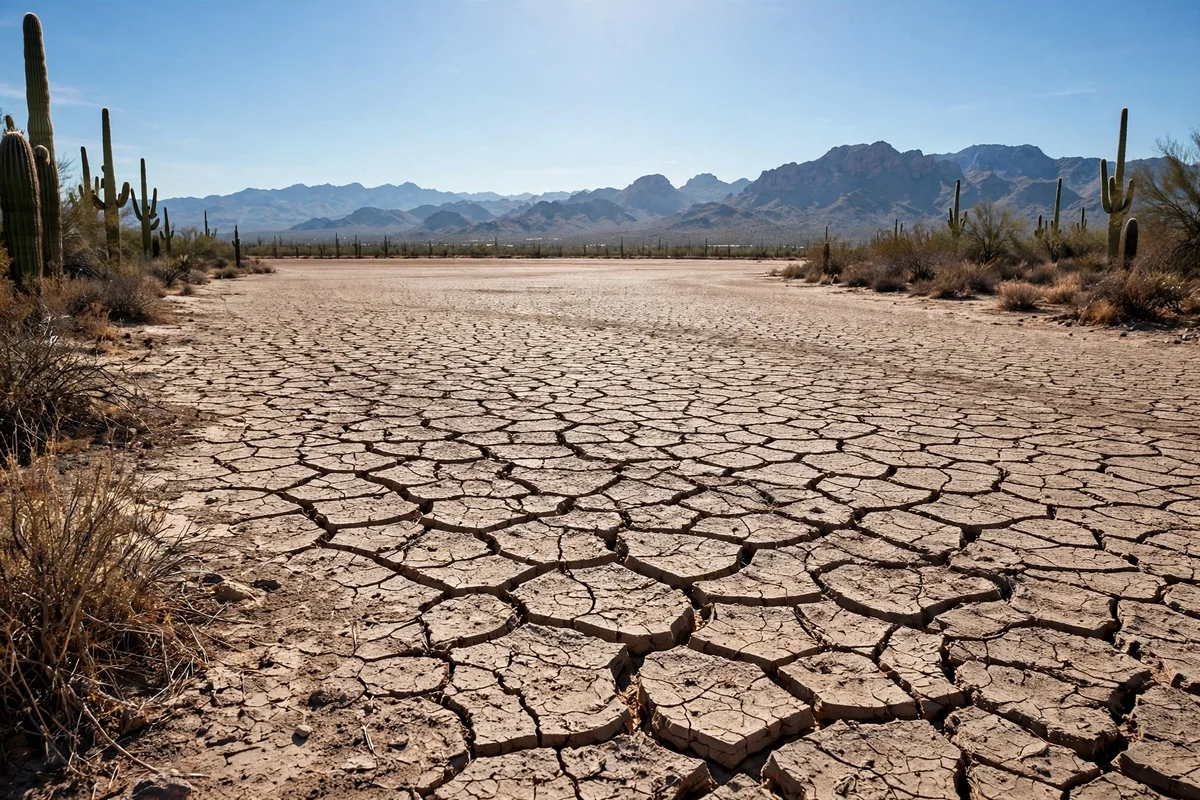
Phoenix ground works against buried lines in two ways: clay pockets that swell when wet and shrink as they dry, and caliche, the hard cement-like layer that holds water in place instead of letting it drain away. We serve homes across the city, from historic central neighborhoods like Willo and Encanto to new builds on the north side, and we pin each leak to one place with a meter check and instruments before any repair work starts. Ranch homes from the 1950s and 1960s often carry copper lines that have seen decades of hard water, so a warm spot on the floor here is worth a look.
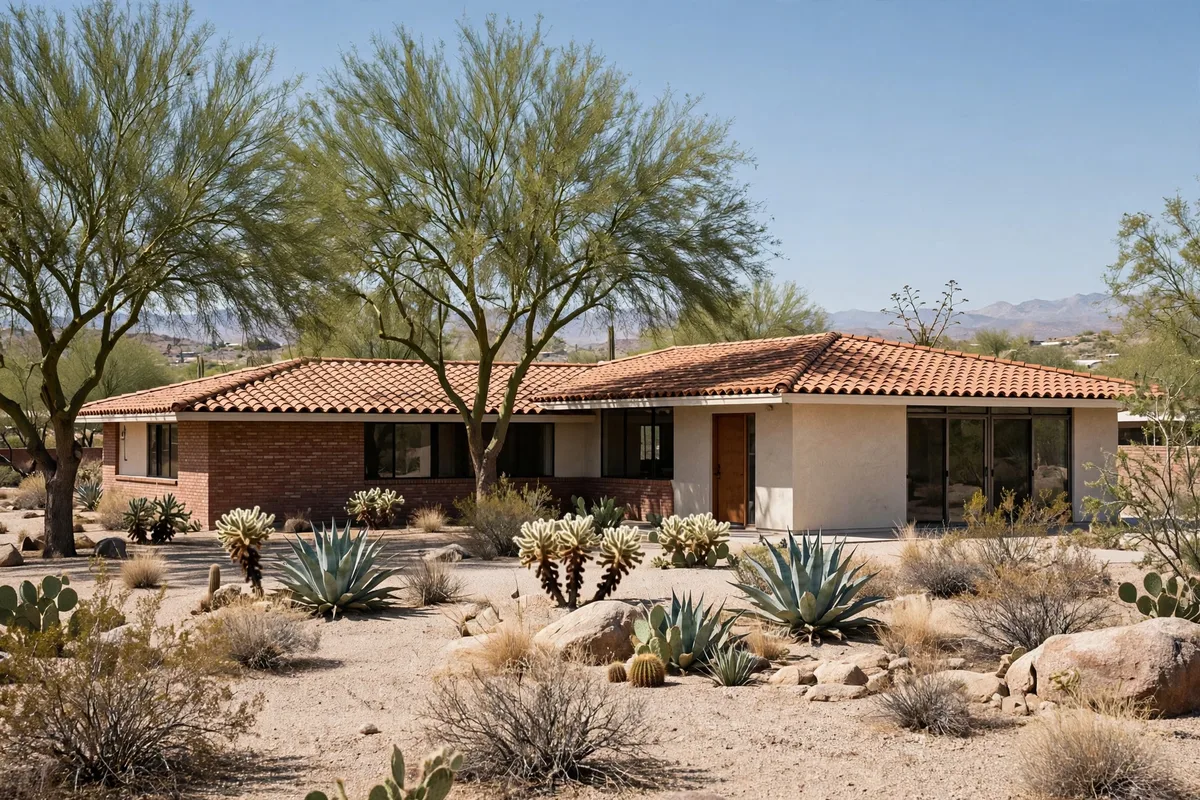
Phoenix ground works against buried lines in two ways. Clay pockets in the soil swell when wet and shrink as they dry, and that movement stresses the lines under a slab. Caliche, the hard, cement-like layer found in much of the Valley, holds water in place around a line instead of letting it drain away, so a small leak stays wet and spreads.
Housing stock in Phoenix spans many eras, and each era brings its own lines. Ranch homes from the 1950s and 1960s in central neighborhoods often carry copper lines that have seen decades of hard water. Newer builds in north Phoenix and Ahwatukee more often use PEX or newer copper, but a single bad joint or a line nicked during construction can still leak.
Phoenix water comes from the Salt River, the Colorado River, and groundwater, and it runs hard. Mineral buildup wears at joints and bends over time, and long hot summers add steady expansion and contraction to the lines. Monsoon storms then soak the ground in short bursts, swelling clay soil right when lines are already under strain. Where mineral buildup has thinned a joint, we fit new copper fittings and check the pressure regulator on the line, since the Arizona Department of Water Resources notes that supply pressure varies across the Valley, and high pressure wears a thin line faster.
If you want to read up on your own water, the City of Phoenix posts water quality reports for its system, and Arizona's water agency tracks water conditions across the state.
Willo and Encanto are the Phoenix neighborhoods that teach the most about slab leaks, because their historic homes carry lines under slabs poured long ago, and each era brings its own risk. Ranch homes from the 1950s and 1960s in central neighborhoods often carry copper lines that have seen decades of hard water, and a line that has served since the home was built can open at one weak joint after years of quiet service. North Phoenix and Ahwatukee tell a different story: newer builds on former desert land, where rocky soil and caliche shape how water spreads, and where a single bad joint or a line nicked during construction can leak within a few years of the build. For a Phoenix homeowner, the habit that pays is to walk the tile floors in bare feet once a month and to watch the water bill beside the meter: a warm patch that stays warm while the rest of the floor feels cool is worth a meter check now, because a small leak under a slab stays wet and spreads when caliche holds the water in place.
Glendale, Tempe, Scottsdale, Mesa, and Peoria all share Phoenix's Valley ground, with clay pockets and caliche under the streets and the same hard water in the lines. A leak in any of these cities behaves much like a leak here, and we travel between them on one route, starting every job the same way: a meter check with all water off, then instruments to narrow the leak to one place.
| City | Ground | What changes |
|---|---|---|
| Glendale | Valley alluvium and clay | Same Valley ground, from mid-century districts to the master-planned north. |
| Tempe | Salt River alluvium | Alluvial soil under mid-century streets near campus. |
| Scottsdale | Sandy south, rocky north | The south is Valley ground; the north runs rocky toward the foothills. |
| Mesa | Salt River alluvium, clay, and caliche | The same ground under a bigger city, with many eras of housing. |
| Peoria | Split ground — clay south, rock north | The south matches Phoenix; the north runs rocky toward Lake Pleasant. |
The three guides below answer the questions Phoenix homeowners ask us most: the seven signs to watch for, why a water bill jumps, and whether a spot repair or a reroute fits the line. Read them before you call, and you will know what the pressure test is for and why we find the leak before any slab is opened.
Warm spots, damp floors, and a jumping water bill can all point to a leak under your slab. Learn the seven signs to watch for and what to do first.
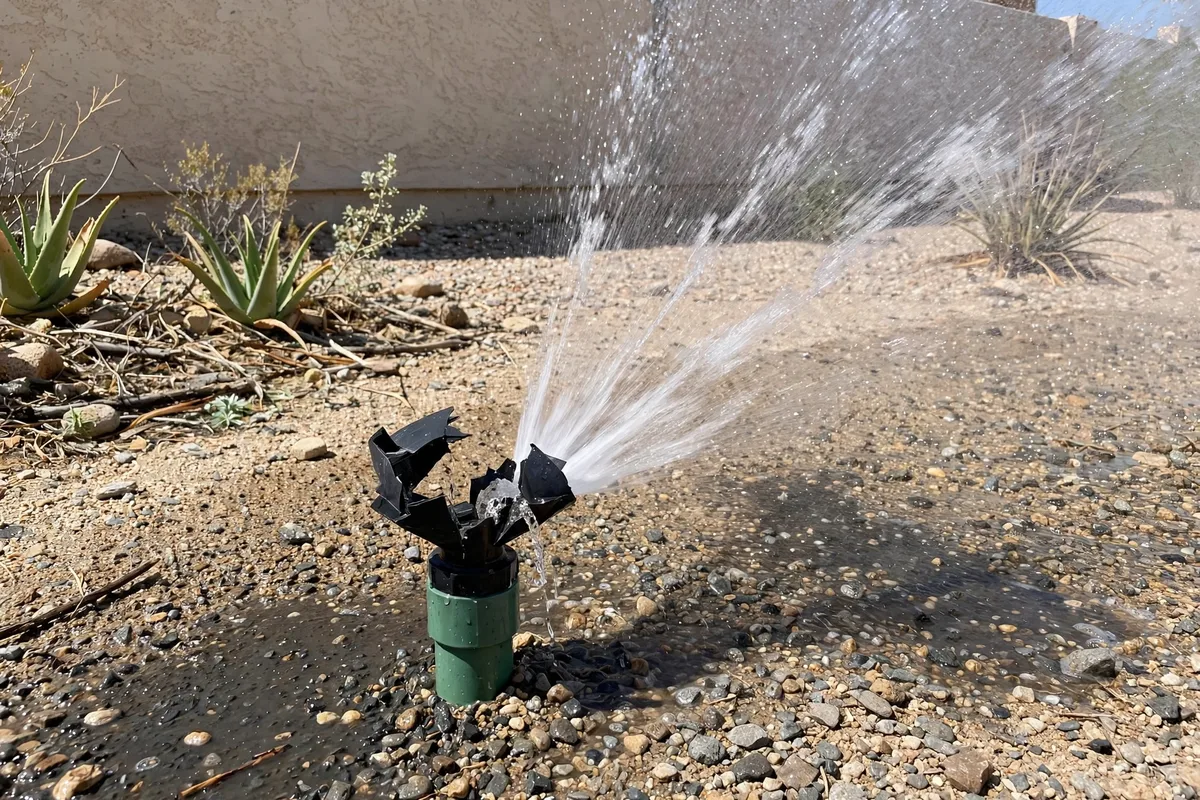
A jumping bill can come from a slab leak, a running toilet, irrigation, or a seasonal change. Learn how to narrow it down before you call.
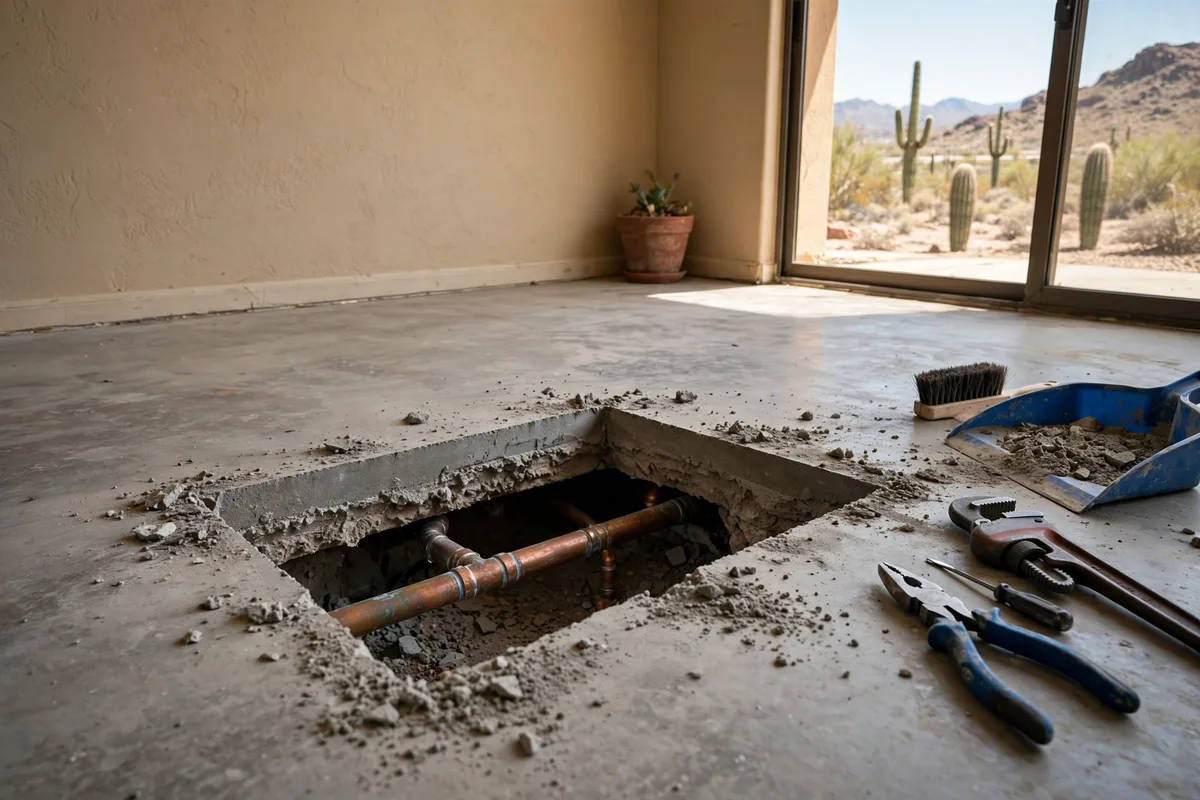
One fix targets a single leak, the other replaces the run. Compare both side by side and learn which one fits your line.
Spot Repair vs Repiping: Which Fix Does Your Slab Leak Need?
These are the questions Phoenix homeowners ask us most often, from the historic homes in Willo and Encanto to the new builds on the north side. If your question is not answered here, call us at (480) 681-1950 and ask it directly, and we will give you a straight answer about your home.
Yes. Historic homes often carry older lines under slabs poured long ago, and detection works the same way: meter check first, then listening, thermal imaging, pressure testing, and moisture readings to narrow the leak to one place before any repair work starts.
Summer use does rise with irrigation and pools, so a climbing bill alone does not prove a leak. Check the meter with all water off. If the dial still moves, water is leaving the system somewhere hidden, and that points to a slab leak rather than seasonal use.
Caliche drains poorly, so water from a leak tends to pool and spread along the slab instead of soaking away. That can push damp patches far from the leak itself, which is why we locate the leak with instruments rather than digging where the damp patch shows.
A storm does not crack a sound line on its own, but heavy rain swells clay soil and shifts the ground under a slab. A line already worn thin by hard water can give way under that movement, so leaks often show up in the weeks after a wet stretch.
A spot repair holds when the rest of the line tests sound. When pressure testing shows weakness along the line, or the same line has leaked before, a reroute fits better. We tell you which case yours falls into before any repair work starts. That judgment matters most in older Phoenix homes, where a line may have carried hard water for decades.
Note which room feels warm, then call us at (480) 681-1950. A warm spot means a hot-line leak is already warming the slab, and Phoenix clay and caliche hold that water in place while it spreads. We pin each leak to one place with a meter check and instruments before any repair work starts.
In Phoenix, the first sign is often a warm patch on a tile floor that stays warm while the rest of the floor feels cool. A bill that climbs while your habits stay the same is another. For the full list of signs and what each one means, see the homepage.
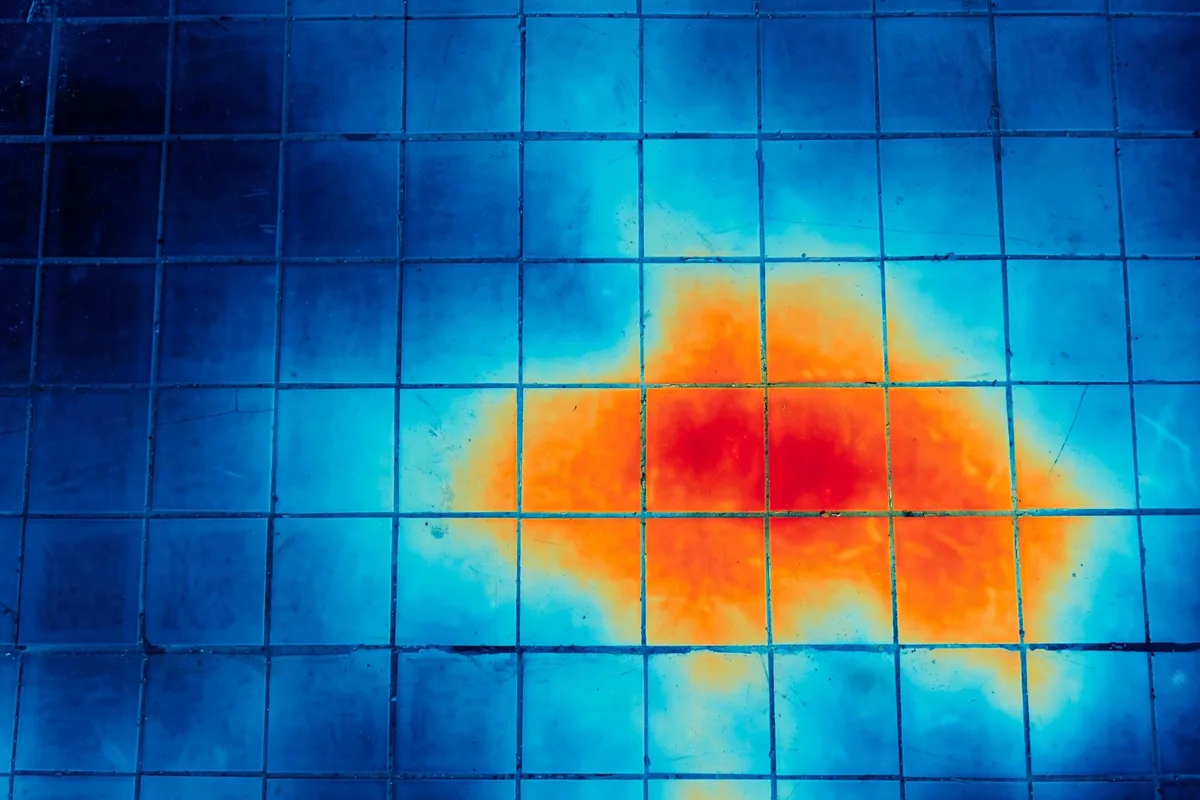
In Phoenix, the first sign is often a warm patch on a tile floor that stays warm while the rest of the floor feels cool.
Grout that darkens, carpet that feels cool and spongy underfoot, or wood that cups or swells near a damp spot.
A water bill that jumps while your habits stay the same — a jump that does not match the season.
Our Phoenix route runs from downtown, Midtown, and Uptown through Willo and Encanto and out to the new builds up north, and the neighborhoods below are the ones we visit. Historic homes sit on that list beside newer infill and north-side builds. If yours is not listed, call us and we will confirm we can reach you.
ZIP codes across Phoenix include 85004, 85012, 85013, 85014, 85015, 85016, 85018, 85020, 85021, 85022, 85023, 85024, 85025, 85026, 85027, 85028, 85029, and 85044.
Landmarks nearby include Camelback Mountain, the Phoenix Mountains Preserve, and South Mountain Park and Preserve.
Detection in Phoenix starts with a meter check and a walk through the rooms where the signs show, then listening gear, thermal imaging, pressure testing, and moisture readings narrow the leak to one place. From there, the fix depends on what we find: a single leak in a sound line usually takes a spot repair, while a line that has leaked before or tests weak along its length usually takes a reroute. Where a leak sits under a renovated floor, we also use a video pipe inspection camera on exposed runs, so a worn joint can be seen directly before the slab is touched, and the repair can be planned around what the camera shows.
Last updated: November 14, 2026.
Think you have a slab leak? Talk to us.